The Difference Between High Fantasy and Low Fantasy
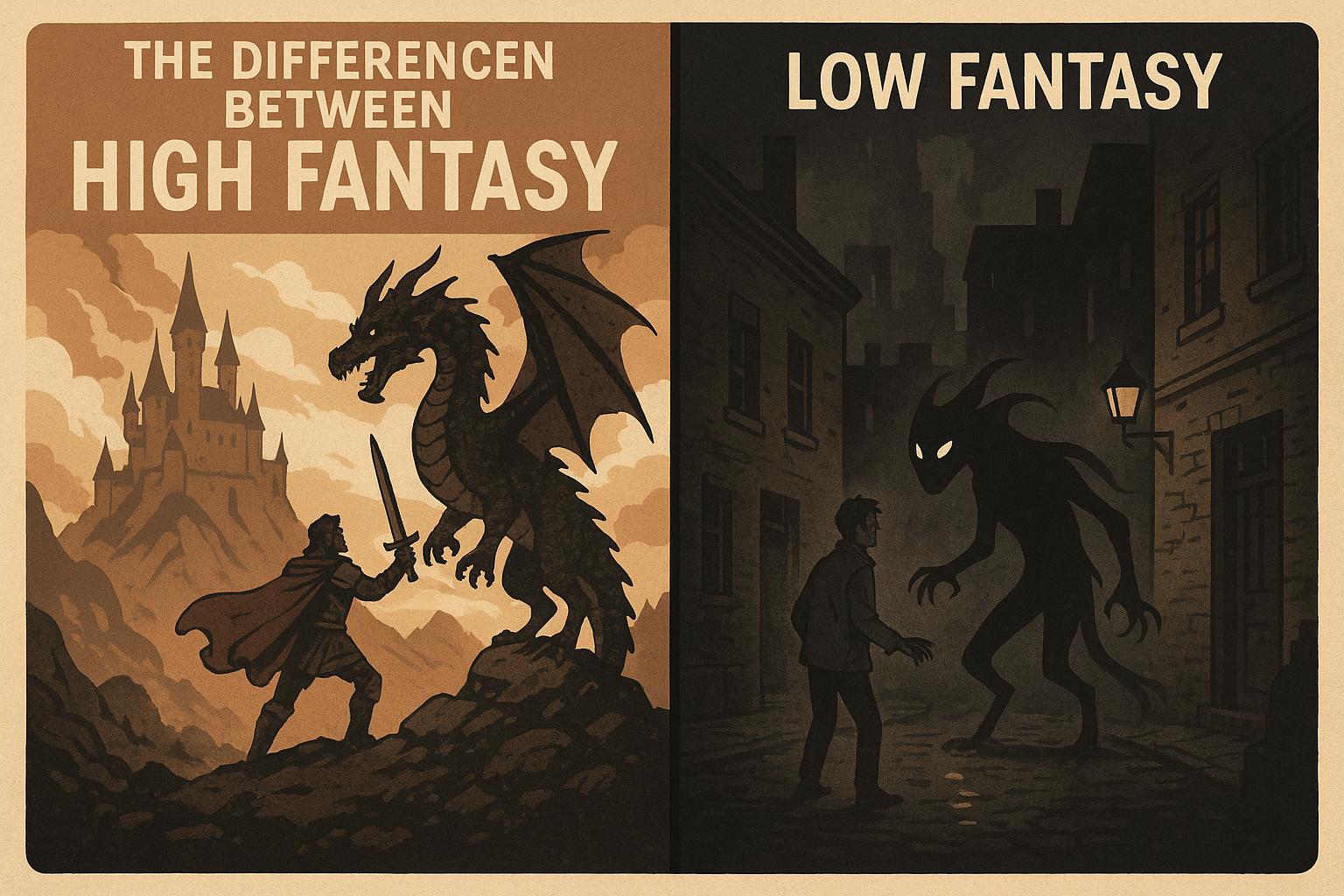
Understanding High Fantasy and Low Fantasy
In the realm of literature, particularly within the fantasy genre, the terms “high fantasy” and “low fantasy” are often used to classify different types of narratives. These classifications help readers understand the setting, themes, and elements they might encounter in a given story.
High Fantasy
High Fantasy, sometimes referred to as epic fantasy, is characterized by its setting in a secondary or alternative world distinct from the real world. Such stories are crafted to transport readers into a new universe, often with vividly imagined cultures, languages, and histories. This type of fantasy narrative usually features complex plots, a richly detailed world with its own rules and laws, often accompanied by a battle between good and evil forces. Authors like J.R.R. Tolkien with his renowned work “The Lord of the Rings” and George R.R. Martin with “A Song of Ice and Fire” series are quintessential examples of high fantasy literature.
These authors not only create an alternate universe but populate it with deeply nuanced characters and societies, where the readers often follow a hero’s journey. The narratives frequently mirror heroic epics, where the hero embarks on an adventurous quest, usually against a formidable antagonist. This epic scale is often underlined by the prevalent use of themes like destiny, courage, and sacrifice.
Characteristics of High Fantasy
There are several defining features of high fantasy that differentiate it from its counterpart:
World-building: The creation of a new, distinct world is a hallmark characteristic, involving detailed exposition of the geography, history, sociopolitical structures, and cosmology. Authors carefully sculpt these worlds to make them immersive and believable, often devoting attention to minutiae such as the significance of magic systems, the genealogy of races, and the historical alliances and conflicts.
Epic Scope: Stories often involve large-scale events impacting the fate of the world. The stakes are monumental, affecting entire kingdoms and sometimes even the entire world. The plotlines often involve wars, quests for power, and the rediscovery of ancient secrets that could alter the universe’s balance.
Mythical Creatures and Magic: High fantasy often incorporates mythical creatures and elements of magic as integral parts of the plot. Dragons, elves, wizards, and magical artifacts are common inclusions. These elements serve to enhance the sense of adventure and wonder, making the narrative compelling and expansive.
Low Fantasy
Low Fantasy, in contrast, is typically set in the real world or a world very similar to it. This subgenre grounds its fantastical elements in an environment that feels familiar to readers. In these stories, magical elements intrude upon the mundane reality, creating a blend of realism and fantasy. The effects of magic or supernatural occurrences are usually more limited in scale and scope when compared to high fantasy. An example of low fantasy could be found in works like “The Iron Druid Chronicles” by Kevin Hearne.
Low fantasy narratives often focus on the subtle interweaving of the magical and the mundane. The characters might not be aware of the magical elements interfused in their world, or they might regard these elements with skepticism or reverence, reflecting real-world attitudes towards the unknown. This creates a subtle tension and invites readers to imagine what if scenarios, contemplating the potential existence of magic in our own reality.
Characteristics of Low Fantasy
Here are key aspects that generally define low fantasy:
Real-World Setting: The action takes place in a familiar world, often alongside normal, non-magical life. The everyday setting allows readers to draw parallels between the fantastical events in the story and real-life experiences, making the narrative relatable yet intriguingly other-worldly.
Subtle Magic: Magical elements are present but do not dominate the storyline. Instead, they lurk beneath the surface, sometimes manifesting unexpectedly and influencing the plot in nuanced ways. The subtlety of the magic often allows low fantasy narratives to create rich symbolic meanings and themes closely tied to human psychology and societal issues.
Focus on the Everyday: The narrative often explores the impact of fantastical elements on ordinary individuals or small communities. This focus allows for character-driven storylines where internal conflicts and personal growth are as significant as the outward magical occurrences.
Conclusion
Understanding the difference between high and low fantasy can enhance one’s appreciation of the genre. While high fantasy presents vast new worlds to explore, with their intricate political landscapes, massive wars, and legendary quests, low fantasy offers a blend of the familiar and the fantastical, bringing magic to the streets of a world resembling our own. Each has its unique charm and appeal, drawing readers into different kinds of adventures.
High fantasy allows readers to escape into worlds filled with epic battles and grand sagas, encouraging exploration of heroism, myth, and the timeless struggle between good and evil. The allure of high fantasy lies in its ability to weave grand narratives that resonate with universal themes, taking readers on journeys filled with awe and splendor.
On the other hand, low fantasy thrives on introspection, allowing readers to ponder the infusion of magic into their daily lives. It offers relatable stories that challenge readers to reconsider the boundaries between reality and imagination, touching on subtle themes like personal discovery, transformation, and the coexistence of the natural and supernatural.
Whether one prefers the epic battles of high fantasy or the subtle enchantments of low fantasy, both subgenres offer rich narratives for exploration. They expand the horizons of imagination and storytelling, each providing a distinct lens to understand the complexities and marvels of alternate possibilities. Through high and low fantasy, readers are invited to escape, reflect, and ultimately contemplate the endless array of narratives that lie beyond the mundane.
Comments are closed.
Comments on 'The Difference Between High Fantasy and Low Fantasy' (0)
Comments Feed